
227
Downloads
12
Episodes
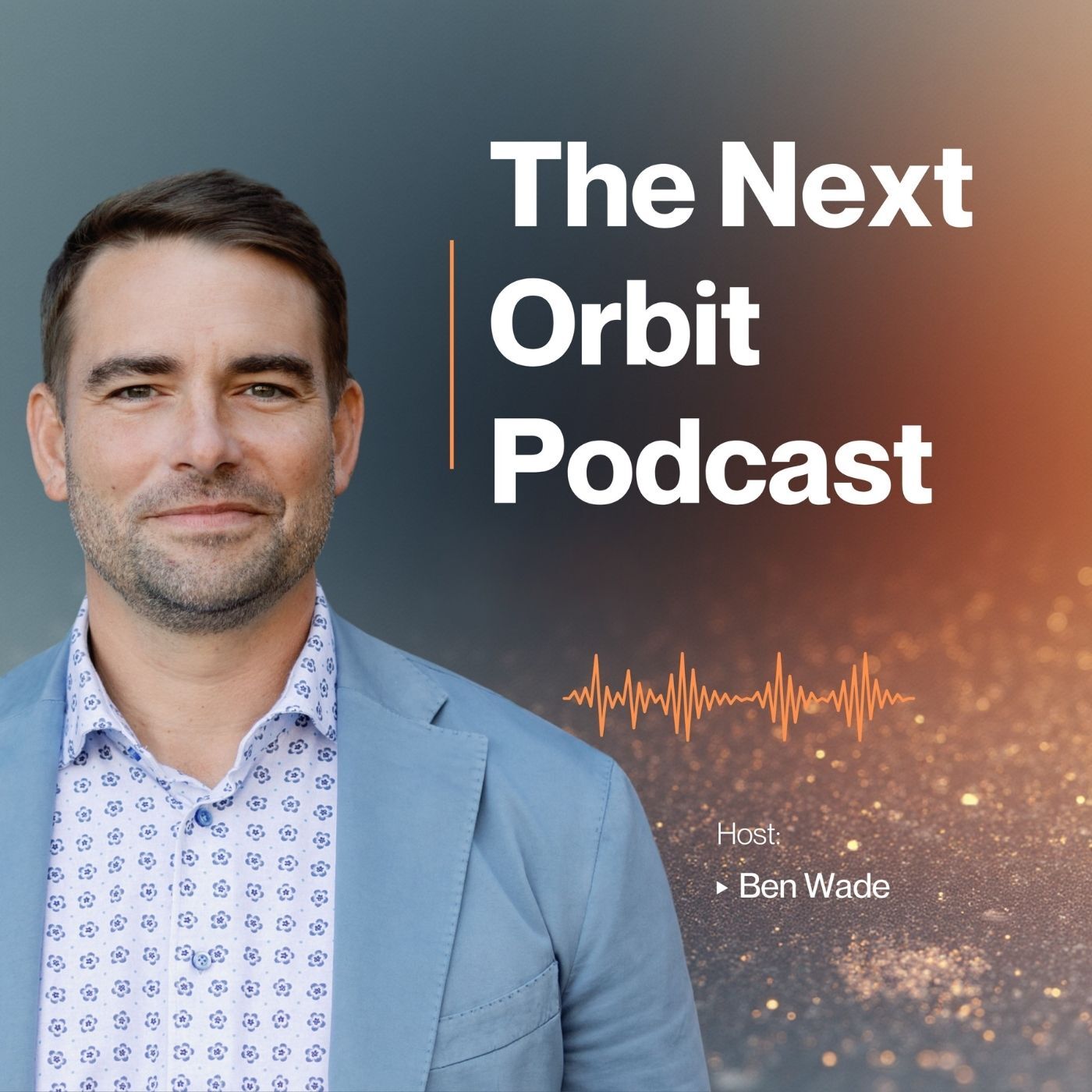
Welcome to The Next Orbit Podcast, where we pull back the curtain on health data and the systems behind it.
We explore how smarter, more responsive infrastructure is built — the kind that actually holds up under real-world pressure. These are the conversations that usually happen off- stage, until now.
We dive into the decisions, tools, and ideas that make healthcare’s digital backbone work.
Our guests include healthcare innovators, data scientists, AI ethicists, policymakers, and health-tech insiders who are building the future of interoperability.
They bring honesty, urgency, and real-world experience as they shape the next version of healthcare infrastructure.
Episodes

4 days ago
4 days ago
57 min
If we asked Henry Ford to apply his famous adage to healthcare today, he'd likely say that most health systems aren't building cars. They're breeding faster horses.
Leah Rosengaus, Executive Director of Digital Health at Stanford Health Care, joined Ben Wade and Mike Hunter to talk about what it actually takes to transform a care model, not just digitize the one you already have.
We get into the four-layer framework her team uses to build AI-enabled care that's modular, scalable, and designed to evolve as the technology does. We also talk about where most organizations go wrong when they bolt AI onto broken workflows, why remote patient monitoring is still largely untapped, and how Stanford cut behavioral health wait times from 66 days to 13 days through interoperable virtual care partnerships.
If you're a health system leader trying to figure out where to invest your limited resources right now while also preparing for the care model of the future, this one is worth your time.
Topics covered:
0:00 Introduction
1:46 The "cars vs. faster horses" framework for healthcare AI
5:28 Why data quality is the real prerequisite for AI transformation
13:16 The four-layer care model stack: knowledge, intelligence, application, and workflow
22:52 No-regrets moves for resource-constrained health systems
29:26 Remote patient monitoring and the new demand curve AI will create
40:10 How to vet and integrate virtual care partners without fragmenting care
42:55 Reimbursement as the missing lever in AI adoption
Learn more about Leap Orbit: leaporbit.com
4 days ago
4 days ago
56 min
Most healthcare organizations are deploying AI right now. Very few are asking who owns the data it generates, where it's stored, how it's audited, or what patients are actually consenting to. R
obert Colin-Torres has been in the room where those conversations didn't happen. As a Chief Compliance Officer with deep roots in federally qualified health centers and PACE programs, he's seen what it looks like when AI adoption moves faster than the questions that should come first.
In this episode, Robert makes a case that might surprise you: compliance isn't the enemy of AI adoption. It's what makes adoption sustainable. From ending physician "pajama time" to building internal audit tools for ambient AI, he walks through what responsible implementation actually looks like on the ground, including at under-resourced community health centers that most people assume can't afford these tools.
If you're a healthcare leader, compliance officer, or anyone building technology for clinical settings, this one is worth your time.
00:00 Introduction & Robert's Background
01:19 The CCO Who Said "Yes, And" to AI
02:08 Why Compliance Gets Left Out of AI Conversations
05:20 Pajama Time: Why Physician Burnout Is a Compliance Risk
07:57 Who Owns the Data? The Questions Nobody Was Asking
13:23 AI Is Not Just for Large Health Systems
15:36 How to Script the Patient Consent Conversation
19:56 Building an AI Audit Tool That Actually Works
36:26 Always Keep a Human in the Loop
40:21 The Next Frontier: Smart Glucometers and Real-Time Care
Subscribe for more content
4 days ago
4 days ago
58 min
AI is moving fast in healthcare. But is it moving responsibly?
In this episode of The Next Orbit Podcast, host Ben Wade and co-host Mike Hunter sit down with nationally recognized CMO and author Dr. Mark Olszyk to explore one of healthcare's most pressing questions: How do we deploy AI ethically when the stakes are life and death?
Drawing on the classic Beauchamp and Childress principles of biomedical ethics, Dr. Olszyk makes the case that the four pillars of principlism, autonomy, beneficence, non-maleficence, and justice, aren't relics of a philosophy classroom. They're the most practical framework available for evaluating AI tools in clinical settings today. And he argues a fifth pillar is urgently needed: governance and accountability.
This conversation covers the ground most AI discussions in healthcare avoid:
- Why ambient AI scribes are winning patient trust while broader governance lags far behind
- How 26% of AI-generated clinical summaries omit something, and what compounds from there
- The direct line from the Tuskegee experiments and Henrietta Lacks to questions of patient data ownership today
- Why hospital credentialing committees govern new surgical techniques rigorously but have no framework for the AI tools providers use on their phones
- The concept of algorithmovigilance and what antibiotic stewardship can teach us about governing AI
- Which hospital roles are most at risk of displacement and what healthcare systems owe those workers
- Why generative AI's probabilistic nature means a human in the loop isn't optional
Dr. Olszyk also shares insights from his book, The Chief Medical Officer's Essential Guide, and why a second edition may be overdue. If you work in healthcare technology, clinical leadership, health policy, or anywhere data touches patient care, this episode is essential listening.
🎧 Subscribe for more conversations at the intersection of healthcare, data, and the systems that connect them.
Chapters
0:00 Introduction
1:25 The Belmont Report and the origins of principlism
5:27 The four pillars: autonomy, beneficence, non-maleficence, justice
6:55 Why generative AI may need a fifth principle
8:27 Applying the four pillars to AI in clinical settings
13:03 Governance and accountability: the missing umbrella
16:27 The black box problem and how biases re-enter trained models
20:01 Algorithmovigilance: lessons from Henrietta Lacks and Tuskegee
26:00 Patient data ownership and the consent conversation we're not having
27:09 "Move fast and break things" vs. first do no harm
29:39 Patients using AI on their own data: benefits and risks
31:33 Mental health patients and chatbots: a vulnerable population
35:41 Organizations leading responsible AI in healthcare
37:20 Practical guidance for providers and health systems
42:21 AI and the healthcare workforce
44:35 Which roles are most at risk in the next five years
48:11 Why generative AI will always need a human in the loop
54:02 Insights from The Chief Medical Officer's Essential Guide
Feb 26, 2026
Feb 26, 2026
24 min
The 2026 ASTP Annual Meeting just wrapped in Washington, DC, and the energy in the room felt different this year.
Host Ben Wade sits down with Leap Orbit founding partner, David Finney, and co-host turned guest, Mike Hunter, to unpack what they actually heard on the ground at the Omni Shoreham, beyond the press releases and official sessions.
This one is for anyone working at the intersection of health data policy, interoperability, and public health.
🎧 Subscribe to The Next Orbit for more conversations at the intersection of healthcare, technology, and policy.
sLrciJQTNBA641S8bhIF
Feb 19, 2026
Feb 19, 2026
55 min
In this episode of The Next Orbit Podcast, host Ben Wade sits down with Dr. Peter Antevy, a pioneer in pediatric and EMS care, to discuss how he turned a critical medication error into a life-saving innovation: Handtevy.
Handtevy is a revolutionary system designed to provide accurate medication dosing, equipment sizing, and protocol guidance during pediatric emergencies—helping clinicians act fast, reduce errors, and save lives.
Dr. Antevy shares his journey from working in children’s hospital ERs to overseeing EMS for millions of people, the challenges of introducing new medical protocols, and the impact of technology in high-pressure emergency situations.
In this episode, you’ll learn about:
- Dr. Antevy’s pivotal early career experiences and the medication error that inspired Handtevy
- How Handtevy simplifies pediatric dosing and preparation in real-time emergencies
- The emotional and psychological impact of pediatric care on healthcare professionals
- Transitioning from hospital emergency medicine to EMS oversight and innovation
- Implementing new protocols and overcoming resistance in healthcare systems
- The future of EMS innovation and integration with EMR systems
Whether you’re a healthcare professional, EMS provider, or simply interested in medical innovation, this conversation highlights how preparation, technology, and innovative thinking are saving lives every day.
Timestamps:
00:00 A Tragic Mistake and Realization
00:35 Introduction to The Next Orbit Podcast
01:12 Meet Dr. Peter Antevy: Pioneer in Pediatric and EMS Care
01:32 Revolutionizing EMS
02:40 Challenges in Pediatric Emergency Care
03:45 The Critical Need for Accurate Dosing
05:26 The Birth of Handtevy
12:09 The Evolution of Handtevy
21:32 The Importance of Preparation in Emergency Situations
26:46 Understanding Pediatric Weight Concerns
27:28 Analogies in Medicine: Wrestling and Two-Minute Drills
29:52 The Emotional Toll of Pediatric Care
30:37 Transitioning from ER to EMS
32:50 Innovations in EMS: Blood on Ambulances
36:39 Challenges in Healthcare Innovation
39:59 Proving the Efficacy of New Methods
51:27 Integration with EMR Systems
54:14 Future Goals and Contact Information
🎧 Listen and subscribe
#PediatricCare #EMS #EmergencyMedicine #HealthcareInnovation #PatientSafety #Handtevy #TheNextOrbitPodcast
Feb 5, 2026
Feb 5, 2026
45 min
Innovating Nephrology: Dr. Shannon Beardsley on Extending Dialysis Access Lifespan
In this episode of The Next Orbit podcast, host Ben Wade discusses the challenges and innovations in the field of nephrology, which accounts for a significant portion of Medicare spending annually. Dr. Shannon Beardsley, an interventional radiologist and innovator, shares his personal motivation and experiences in managing dialysis access. He introduces Ristra, a software product designed to map and improve the cannulation record, enhancing patient care and reducing complications. The conversation covers the barriers to innovation, the intricacies of the dialysis payment system, and potential cost savings from improved practices. Dr. Beardsley also delves into the potential impact of Ristra on patient outcomes, quality of life, and the importance of collaboration among healthcare teams in adopting new technologies.
00:00 Introduction to Dialysis Access
00:37 Welcome to the Next Orbit Podcast
01:14 The High Cost of Kidney Disease
02:47 Challenges in Nephrology Innovation
04:42 Dr. Shannon Beardsley's Journey
08:57 Innovative Solutions for Dialysis
12:15 Impact on Patient Quality of Life
20:20 Technology in Dialysis Management
22:39 Integrating New Tools into Dialysis Workflow
24:04 Challenges in Adoption Across Care Teams
25:09 Strategic Expansion and Integration
27:01 Cost Implications and Potential Savings
32:12 Government Programs and Reimbursement
35:02 Gathering Data and Partnering with Dialysis Centers
37:52 Engaging Technicians and Improving Workflow
43:43 Unexpected Benefits and Future Prospects
44:45 Conclusion and Future Invitations

Jan 22, 2026
Jan 22, 2026
1 hr 6 min
In this episode of The Next Orbit Podcast, host Ben Wade unpacks the recently announced $50 billion federal initiative aimed at rural healthcare transformation, launched alongside significant Medicaid cuts.
Joined by Dr. Vincent J. Thompson, MD, President & CEO of the Community Health Clinical Research Corporation, the conversation goes beyond headlines to examine where the money actually flows, why frontline clinics continue to struggle, and how sustainable solutions can be built inside community health centers.
Dr. Thompson shares firsthand insights into funding misalignment, the unintended consequences of policy decisions, and how integrating clinical research into primary care can unlock new revenue streams, improve patient outcomes, and strengthen rural health systems for the long term.
This episode is essential listening for healthcare leaders, policymakers, community health executives, and innovators working to close gaps in access and care.
Episode Breakdown & Timestamps
00:00 – Why rural health funding is back in the spotlight
00:41 – Welcome to The Next Orbit Podcast
01:19 – Overview of the $50B rural health funding announcement
02:08 – Why rural health funding often fails at the ground level
03:35 – The real-world impact of Medicaid cuts on clinics
05:16 – How federal funds are distributed—and where they stall
09:03 – Preventive care vs. hospital-based care: a cost reality check
13:37 – The role of HRSA and its influence on community health centers
17:20 – What effective fund allocation should actually look like
23:03 – Innovative approaches to stabilizing rural healthcare
32:07 – Building sustainable funding pathways beyond grants
35:04 – Dr. Thompson’s journey into leadership in primary care
35:25 – The risks of over-reliance on Medicaid funding
35:52 – Using clinical research as a financial and care solution
37:37 – How policy changes ripple through health centers
38:51 – Founding the Community Health Clinical Research Corporation
39:49 – Realigning private-sector dollars for public health impact
40:21 – Addressing diversity gaps in clinical research
41:08 – Why research participation benefits health centers and patients
42:26 – Overcoming barriers to research adoption
42:57 – Training and support for health centers entering research
45:07 – Creating a national research cohort
48:00 – Sustaining community health centers through research models
51:12 – How health centers can get involved today
52:03 – Ethical, effective research practices explained
52:58 – Clearing misconceptions around clinical research
56:32 – Financial upside and long-term sustainability
01:02:37 – Call to action for community health leaders

Jan 8, 2026
Jan 8, 2026
39 min
In this episode of the Next Orbit Podcast, host Ben Wade is again joined by clinical pharmacists Shelly Fortner and Sing Ping Chow, specialists in managing complex pain syndromes, for an in-depth discussion on opioid prescribing and patient safety in today’s healthcare landscape.
Through four real-world patient cases, the conversation explores how clinicians use Prescription Drug Monitoring Programs (PDMPs) to guide safer, more effective pain management decisions. The episode breaks down best practices around opioid prescribing, urine drug screening, and the importance of transparent, non-judgmental communication with patients.
The pharmacists also address common misconceptions surrounding opioid use in patients receiving Suboxone or methadone, offering practical guidance for managing pain across inpatient and outpatient settings. This discussion provides clinicians with actionable insights rooted in evidence, empathy, and clinical experience.
Whether you’re a pharmacist, physician, nurse, or healthcare professional navigating pain management, this episode delivers thoughtful perspectives on balancing relief, safety, and patient trust.
#PainManagement #OpioidSafety #PDMP #ClinicalPharmacy #healthcareleadership
Timestamps -
00:00 Introduction and Welcome
01:14 Meet the Guests: Pain Management Experts
02:35 Case Study 1: Latasha Salazar's Hip Replacement
06:09 Case Study 2: Luke Sadler's Metastatic Cancer
17:03 Case Study 3: Raven Johnson's Acute Pain
24:16 Case Study 4: Peggy Carter's Shoulder Surgery
27:35 Addressing Myths and Misconceptions
37:38 Final Thoughts and Contact Information
39:07 Closing Remarks